
The linear economy—take, make, dispose—is dying. Rising material costs, resource scarcity, and regulatory pressure are forcing manufacturers to rethink how they design products, manage materials, and recover value from waste. The circular economy offers a roadmap: keep materials in use, eliminate waste, and regenerate natural systems. Here's how to make it work.

Why the Linear Economy Is Breaking Down
The traditional manufacturing model is fundamentally extractive:
- Extract: Mine raw materials
- Produce: Turn materials into products
- Consume: Use products (often briefly)
- Dispose: Send waste to landfill or incineration
This model worked when materials were cheap and environmental costs were externalised. It no longer works because:
- Resource Scarcity: Critical materials (rare earths, lithium, copper) face supply constraints and price volatility
- Regulatory Pressure: Extended Producer Responsibility (EPR) laws force manufacturers to take back and recycle products
- Waste Costs: Landfill taxes and incineration costs are rising across Europe
- Customer Expectations: Consumers (especially B2B buyers) demand sustainable products and circular credentials
- Climate Commitments: Net-zero targets require reducing embodied carbon in materials
Manufacturers who cling to linear models face escalating costs, regulatory risk, and competitive disadvantage.
What Is the Circular Economy?
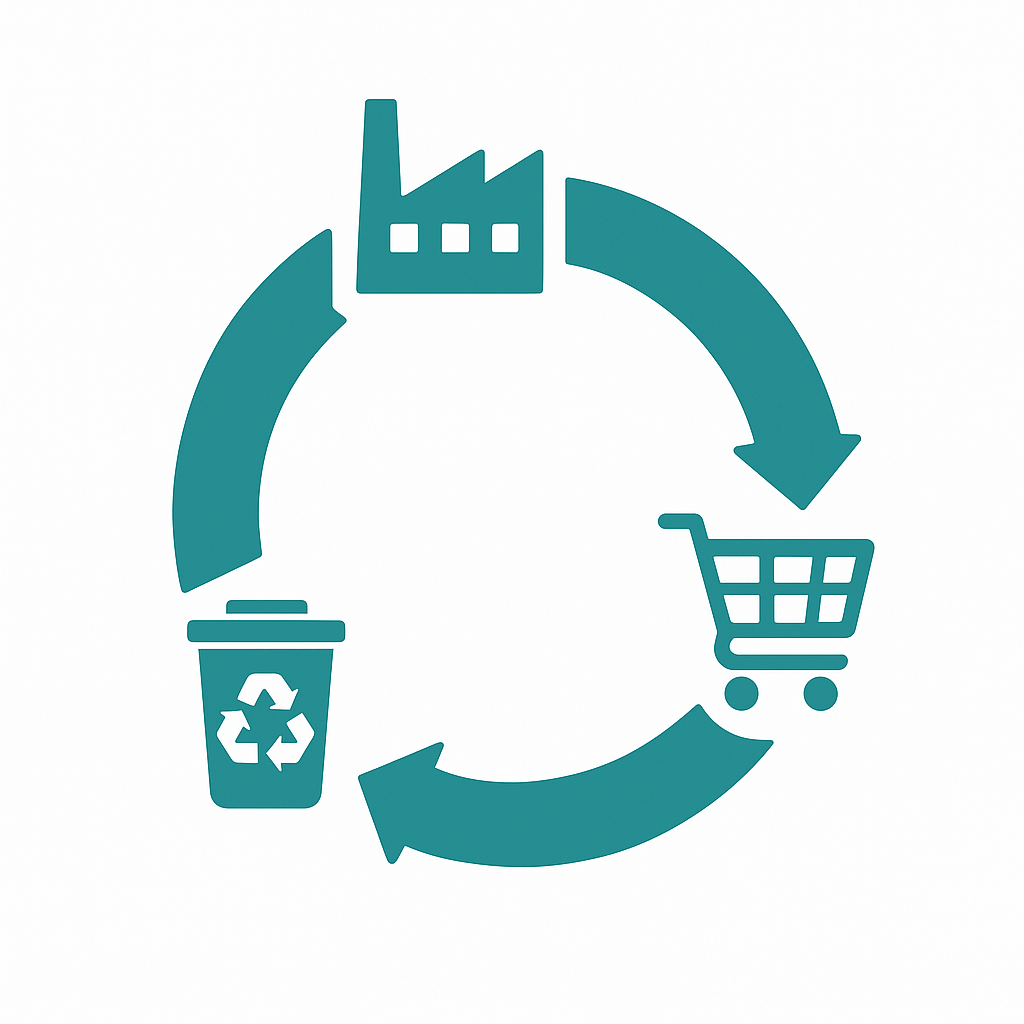
The circular economy is a system where materials retain value and remain in productive use for as long as possible. It's built on three core principles (from the Ellen MacArthur Foundation):
1. Eliminate Waste and Pollution
Design waste out of the system. This means:
- Designing products for durability, repair, and disassembly
- Eliminating toxic materials that prevent recycling
- Reducing process waste (scrap, offcuts, emissions)
2. Circulate Products and Materials at Their Highest Value
Keep products and materials in use through:
- Reuse: Extend product life through resale, refurbishment
- Repair: Fix broken products instead of replacing them
- Remanufacture: Restore products to like-new condition
- Recycle: Break down materials and reprocess (last resort, not first)
3. Regenerate Nature
Move from "less bad" to "net positive"—actively restore ecosystems, use renewable materials, and build regenerative supply chains.
The Circular Economy Hierarchy: Value Retention
Not all circularity strategies are equal. The goal is to retain maximum value. Here's the hierarchy (from highest to lowest value retention):
- Refuse: Eliminate unnecessary products (best option)
- Rethink: Make products more intensively used (sharing models, product-as-a-service)
- Reduce: Use fewer materials, design for efficiency
- Reuse: Extend product life through second-hand markets
- Repair: Fix broken products
- Refurbish: Restore products to working order
- Remanufacture: Disassemble and rebuild to original specification
- Repurpose: Use products for different applications
- Recycle: Break down into raw materials and reprocess
- Recover: Extract energy through incineration (lowest value)
Focus efforts on the top of the pyramid—prevention and life extension—before resorting to recycling.

Circular Economy Strategies for Manufacturers
1. Design for Circularity (DfC)
The majority of a product's environmental impact is locked in at the design stage. Circular design principles include:
Design for Durability
- Use robust materials that withstand repeated use
- Avoid planned obsolescence (make products last)
- Offer extended warranties to signal longevity
Design for Disassembly
- Use mechanical fasteners (screws, clips) instead of adhesives or welds
- Standardise components across product lines
- Label materials for easy identification during recycling
Design for Material Health
- Eliminate toxic substances (heavy metals, persistent chemicals)
- Use mono-materials where possible (easier to recycle)
- Avoid composite materials that can't be separated
Design for Multiple Use Cycles
- Modular design allows component replacement without discarding entire product
- Upgradeable products (e.g., add more memory, swap motors)
- Aesthetic longevity (timeless design, not trend-driven)
Example: Fairphone designs smartphones with modular components (screen, battery, camera) that users can replace themselves, extending product life from 2-3 years to 5+ years.
2. Industrial Symbiosis: One Firm's Waste = Another's Input
Industrial symbiosis creates closed-loop systems where waste from one process becomes feedstock for another.

Case Study: Kalundborg Symbiosis (Denmark)
A network of companies exchange waste streams:
- Power plant steam heats pharmaceutical factory and fish farm
- Refinery gas fuels power plant
- Gypsum from power plant desulphurisation → wallboard manufacturer
- Fly ash from power plant → cement production
Results: Reduced water consumption by 25%, saved 275,000 tonnes CO₂/year, created new revenue streams.
How to Implement:
- Map your waste streams (volumes, composition, disposal costs)
- Identify potential buyers (who could use this as input?)
- Join industrial symbiosis networks (National Industrial Symbiosis Programme in UK)
- Co-locate facilities to minimise transport costs
3. Product-as-a-Service (PaaS) Models
Shift from selling products to selling outcomes. You retain ownership, customers pay for performance.
Examples:
- Michelin: Sells "tyres as a service" to fleet operators (pay per kilometre, Michelin retains ownership and retreads tyres)
- Rolls-Royce: "Power by the Hour" for aircraft engines (airlines pay for thrust, RR maintains engines)
- Philips: "Lighting as a Service" (pay for lumens, Philips owns and maintains fixtures)
Why It Works:
- Aligns incentives—you profit from durability, not volume
- Captures end-of-life value (you control returns and refurbishment)
- Builds long-term customer relationships
- Creates predictable revenue streams
Challenges:
- Requires upfront capital (you finance the asset)
- Operational complexity (logistics, maintenance, refurbishment)
- Customer trust (concerns about lock-in)
4. Closed-Loop Material Flows
Recover materials from end-of-life products and reintroduce them into production.

Levels of Closed-Loop Systems:
Internal Loops (Easiest)
- Reuse production scrap (offcuts, trimmings) in-house
- Regrind rejected parts and remix into feedstock
Example: Plastics manufacturers regrind scrap and blend it with virgin resin (typical 10-30% recycled content).
External Loops (Harder)
- Take back products from customers
- Disassemble, sort, and reprocess materials
- Reintroduce into production
Example: Interface (carpet manufacturer) operates "ReEntry" programme—takes back old carpets, separates fibres, and uses them in new carpet tiles. Now 70%+ recycled content.
Open Loops (Most Complex)
- Materials flow between industries (e.g., construction waste → road base)
- Requires standardisation and market development
5. Waste Stream Monetisation
Turn disposal costs into revenue by finding buyers for waste.
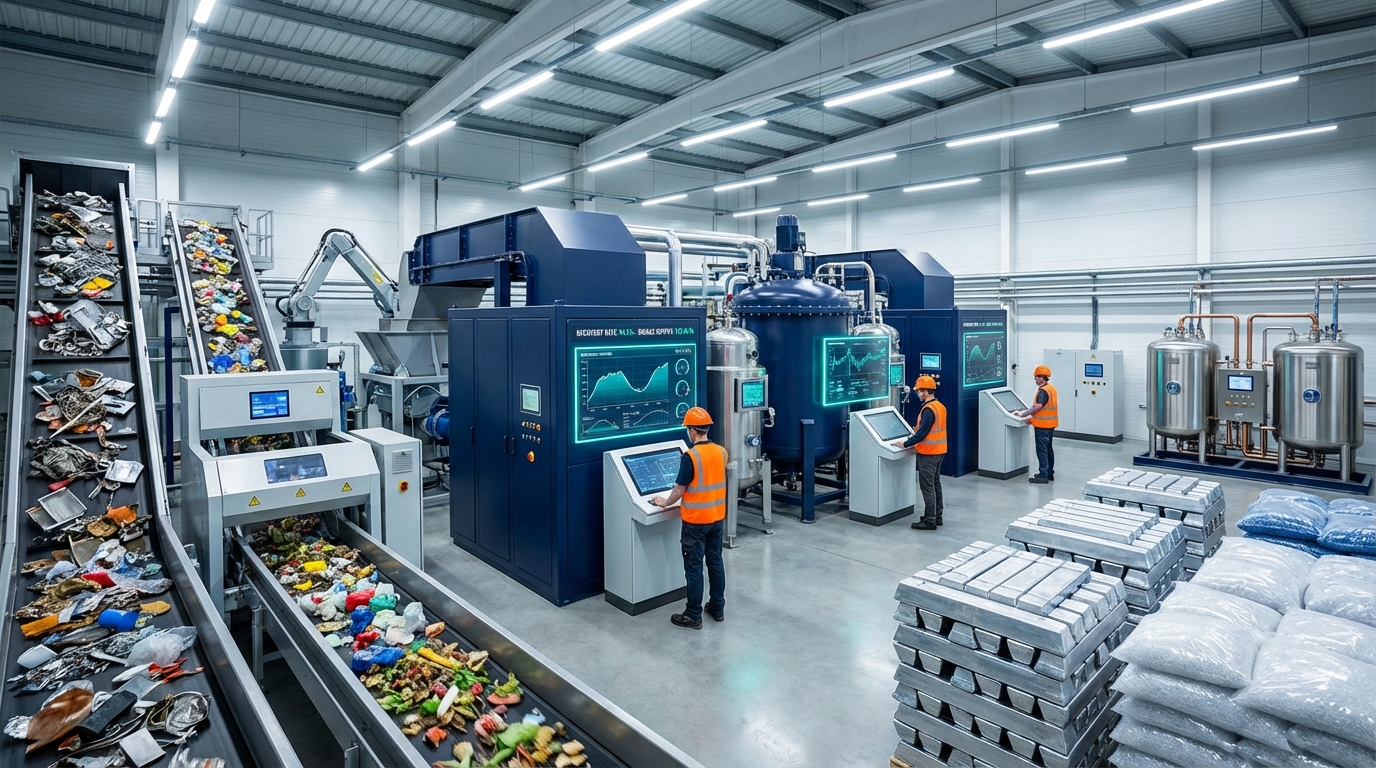
Opportunities by Waste Type:
| Waste Stream | Circular Opportunity | Potential Buyers |
|---|---|---|
| Metal scrap | Sell to scrap metal dealers | Smelters, foundries |
| Organic waste | Anaerobic digestion → biogas | Energy companies, farms |
| Packaging materials | Reuse or sell to recyclers | Reprocessors, pallet companies |
| Waste heat | Recovery for heating/power | Neighbouring facilities, district heating |
| Wastewater | Treatment & reuse | On-site process water, irrigation |
Quick Win: Conduct a waste audit. Map all waste streams by type, volume, and disposal cost. Identify top 3-5 by cost and research markets.
The Business Case for Circular Economy

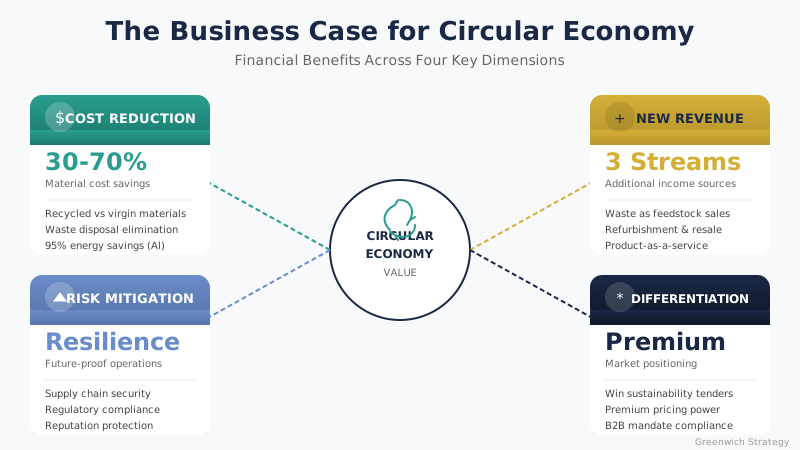
Circularity isn't just environmental—it's financial. Here's where the value accrues:
1. Cost Reduction
- Material Savings: Using recycled or reclaimed materials costs 30-70% less than virgin materials
- Waste Disposal Savings: Diverting waste from landfill eliminates gate fees (£90-150/tonne in UK)
- Energy Savings: Recycled materials require less energy to process (e.g., recycled aluminium uses 95% less energy than primary production)
2. New Revenue Streams
- Selling waste as feedstock to other industries
- Refurbishment and resale of returned products
- Product-as-a-service contracts (recurring revenue)
3. Risk Mitigation
- Supply Chain Resilience: Less dependence on volatile commodity markets
- Regulatory Compliance: Ahead of Extended Producer Responsibility (EPR) mandates
- Reputation Protection: Avoid backlash from linear, wasteful practices
4. Market Differentiation
- Win tenders requiring circular credentials
- Premium pricing for sustainable products
- B2B customers increasingly mandate supplier circularity
Barriers to Circular Economy and How to Overcome Them
Barrier 1: Upfront Investment Costs
Solution: Start with low-capex opportunities (waste monetisation, design tweaks). Use pilot projects to prove ROI before scaling.
Barrier 2: Lack of Infrastructure for Returns and Recycling
Solution: Partner with reverse logistics providers, join industry consortia (e.g., packaging compliance schemes), co-invest in shared infrastructure.
Barrier 3: Customer Behaviour (Preference for New Over Refurbished)
Solution: Educate customers on value proposition (performance, warranty, cost savings). Offer incentives (trade-in programmes, discounts).
Barrier 4: Regulatory Uncertainty
Solution: Engage with policymakers early, participate in industry working groups, design for compliance with emerging regulations (e.g., EU Ecodesign Directive).
Barrier 5: Linear Supply Chains
Solution: Map supply chain, identify circular hotspots (e.g., suppliers using recycled content), build supplier scorecards with circularity metrics.
Practical Steps to Get Started

Step 1: Baseline Current State (Weeks 1-4)
- Conduct material flow analysis (inputs, outputs, waste)
- Calculate waste disposal costs and material costs
- Assess product design for circularity (disassembly, material purity)
- Map current end-of-life pathways for products
Step 2: Identify Quick Wins (Weeks 5-8)
- Waste monetisation opportunities (sell scrap, divert organic waste)
- Internal material loops (reuse production waste)
- Design improvements (switch to mono-materials, eliminate adhesives)
Step 3: Pilot Circular Models (Months 3-6)
- Test take-back programme for one product line
- Partner with one industrial symbiosis exchange
- Launch refurbishment service (if feasible)
- Measure results: cost savings, waste diverted, customer uptake
Step 4: Scale and Integrate (Months 7-12)
- Embed circularity in product development process (design checklists)
- Set circular economy targets (% recycled content, waste diversion rate)
- Build reverse logistics capability
- Train staff on circular principles
- Communicate progress to customers and investors
Real-World Example: Food Manufacturer
Challenge: £85k annual waste disposal costs, dependence on virgin plastic packaging, customer pressure for sustainability.
Circular Interventions:
- Organic Waste: Diverted food waste to anaerobic digestion → £22k savings + £5k revenue from biogas credits
- Packaging: Switched to mono-material (HDPE) packaging, enabling recycling → 40% recycled content, improved recyclability from 20% to 85%
- Water Reuse: Installed closed-loop cooling system → 30% reduction in water consumption, £8k/year savings
- Industrial Symbiosis: Sold spent grains to livestock feed producer → £12k revenue
Total Annual Impact: £47k cost savings + £17k new revenue = £64k financial benefit. ROI on £120k investment: 18 months.
Policy and Regulatory Drivers
Governments are accelerating circular economy transitions:
- UK Plastic Packaging Tax: £200/tonne tax on packaging with <30% recycled content (forces shift to recycled materials)
- Extended Producer Responsibility (EPR): Producers must finance collection and recycling of packaging
- EU Circular Economy Action Plan: Mandatory recycled content targets, right-to-repair legislation
- Scotland's Circular Economy Bill: Waste reduction targets, circular economy duties for public bodies
Early movers gain competitive advantage. Laggards face penalties and market exclusion.
Conclusion: From Linear to Circular
The circular economy is not a utopian vision—it's a pragmatic response to resource scarcity, regulatory pressure, and customer expectations. Manufacturers who embrace circularity will:
- Reduce material and waste costs by 20-40%
- Build supply chain resilience by reducing dependence on virgin materials
- Unlock new revenue streams through waste monetisation, refurbishment, and service models
- Differentiate in the market with credible sustainability credentials
- Future-proof the business against tightening regulations
The linear economy is dying. The circular economy is the future. The question is whether you'll lead the transition or be forced into it.